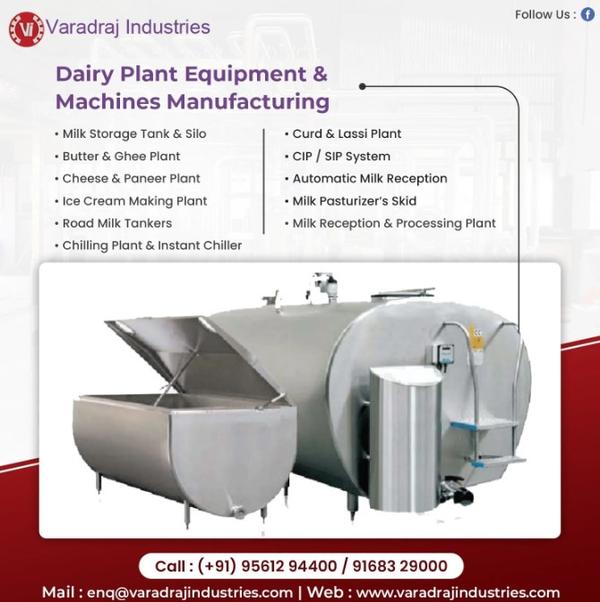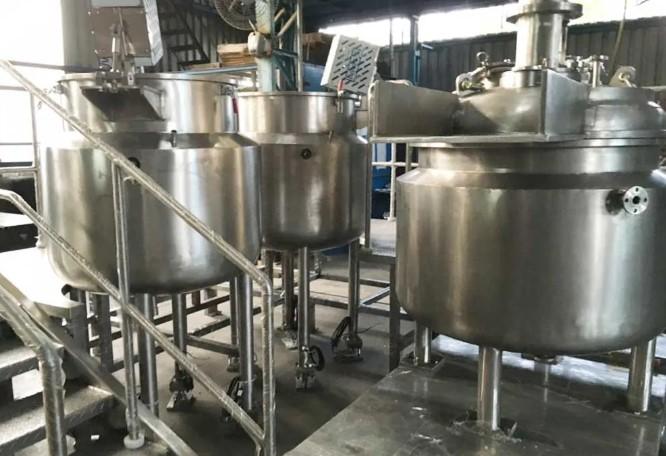
A Curd Plant (also known as a dahi/yogurt processing plant) is a specialized dairy processing system used to produce high-quality curd in a controlled, hygienic, and large-scale environment. It is widely used in dairy industries, milk processing units, and commercial food production facilities. 🥛 What is a Curd Plant? A curd plant is an automated or semi-automated setup that converts milk into curd through pasteurization, controlled cooling, and fermentation using bacterial cultures. It ensures consistent taste, texture, and quality compared to traditional methods. ⚙️ Key Components Milk Reception Tank – Collects and stores raw milk Pasteurizer Unit – Heats milk to eliminate harmful bacteria Homogenizer (Optional) – Improves texture and consistency Fermentation Tank / Incubation Chamber – Maintains ideal temperature for curd formation Culture Dosing System – Adds starter culture (lactic acid bacteria) Cooling System – Stops fermentation at the right stage Filling & Packaging Machine – Packs curd into cups, pouches, or tubs Control Panel – Monitors and controls temperature, time, and process flow 🔄 Working Process Raw milk is received and filtered Milk is pasteurized to ensure safety It is cooled to fermentation temperature (around 40–45°C) Starter culture is added Milk is incubated for a specific time (4–8 hours) Curd is formed and then cooled to stop fermentation Final product is packed and stored

UAE, Dubai
08042783410
+919561294400
 Chat with us
 Chat with us